The Counter
How to read the label, cut face, grade, package, fat, price, and the butcher case when nobody behind the glass can answer for you.
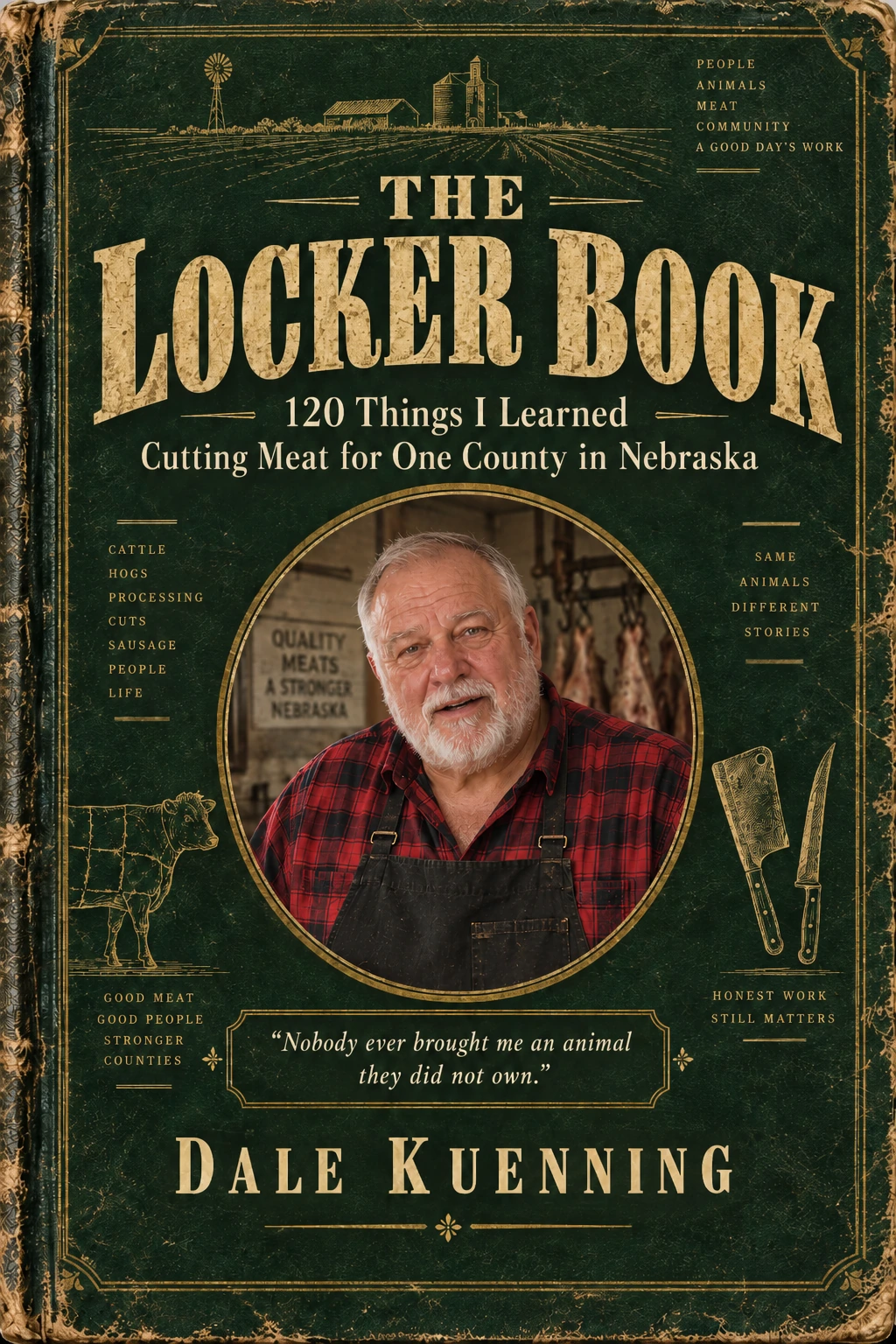
Buying · labels · grades · freezer burn · one good knifeA Nebraska butcher's working book
One hundred and twenty things about meat that a recipe assumes you already know — from the store counter to the knife, the grinder, salt, fire, freezer, bones, and the cuts nobody buys.
I · THE DIFFERENCE
The dry chop, the tough roast, the sausage that will not hold together — those failures often start before the pan. The cut is leaner than the recipe assumed. The muscle came from a different part of the primal. The package was bought by name instead of by what the meat can physically do.
The Locker Book is built to help you see that first — then cook.
II · WHAT IS INSIDE
The book is meant to be jumped around in. Open it to the problem in front of you, find the lesson, and get back to supper.
How to read the label, cut face, grade, package, fat, price, and the butcher case when nobody behind the glass can answer for you.
Buying · labels · grades · freezer burn · one good knifeChuck, brisket, shank, ribs, round, collagen, dry salt, browning, ground beef, doneness, resting, slicing and the cuts that fight you.
Muscle · grain · heat · tendernessShoulder, belly, chops, ham, ribs, lard, cracklin', hocks, cheeks and why modern pork does not behave like your grandfather's.
Pork · fat · ribs · lardCold meat, plates, two-stage grinding, what goes into store ground beef, sausage ratios, casings, meatloaf and meatballs.
Grinding · sausage · textureDry cure, brine, nitrite boundaries, bacon, smoke, seasoning, jerky, scale work and the points where guessing is not good enough.
Cure · smoke · ratios · safetyWhat each family of cuts wants from fire, braising, direct and indirect grill zones, reverse sear, the lid, sous vide and carryover cooking.
Oven · grill · braise · searFreezing, thawing, aging, stock, bulk buying, the freezer inventory and the overlooked pieces that still deserve a place at the table.
Freezer · bones · stock · bulk“Go cook something.”
The last lesson is not another trick. It is the whole book put back into your hands.
III · IF YOU ONLY READ FIVE
This is the book at its most practical: one move, one reason, one failure mode, and where the old rule stops being useful.
Keep all 120 closeOne habit that fixes flat, dry meat without buying another ingredient.
Understand the mechanism once and stop memorizing a different rule for every roast.
Old numbers linger in kitchens long after the meat and the guidance changed.
Ten free seconds that can rescue meat after every earlier step was only almost right.
The map that makes the rest of the book feel like one system instead of 120 isolated rules.
IV · WHY IT GOT WRITTEN DOWN
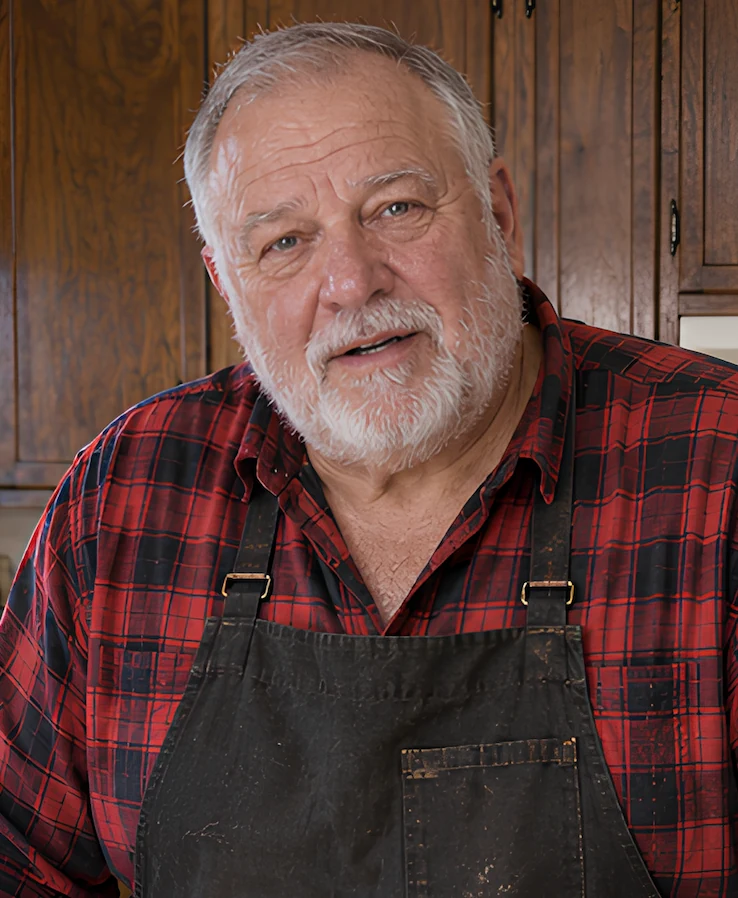
Dale started sweeping floors and tying sausage at fifteen. He came home from Omaha in 1975, cut full time, took the keys in 1979, and closed the locker plant in October 2019.
Farmers did not buy meat there. They brought their own animals, and the shop sent each family home with its own meat wrapped in paper with the family name on it. That made the work personal in a way a modern case cannot be.
By the time the doors closed, the books counted something north of eleven thousand animals. The trade was shrinking. The people who had carried the ratios, the feel, and the judgment in their hands were disappearing with it.
“My father never wrote a word of this down. When he went, most of it went with him. I did not want that to happen twice.”
V · HOW EACH LESSON WORKS
Every item keeps the same rhythm so you can find the useful part fast, even with your hands busy.
The tool, cut, scale, pan or nothing at all.
Plain instructions with numbers where numbers matter.
The muscle, fat, salt, collagen, heat or packaging underneath the result.
The common way people wreck it — including mistakes made in the shop itself.
The old trade was not always wiser. The book says where modern tools win.
VI · READER NOTES
Three readers. Three different reasons for keeping The Locker Book close to the kitchen.
“I bought it after one of Dale’s ground-beef videos and expected a few useful tricks. What surprised me was how often I went back to the sections on browning, salt and slicing. It finally explained why the same pan and the same recipe could give me two completely different results.”

“I have been grilling and cooking meat for years, so I did not expect a book to change much. The parts on reading the cut face, salting ahead and matching heat to the cut did. It is practical, direct, and I like that Dale tells you when the old way is not the better way.”

“Most cookbooks tell me what step comes next. This one tells me why the meat is behaving the way it is. I keep the PDF on my tablet and jump straight to pork shoulder, freezer storage, sausage or whatever I am making. It feels more like a reference book than another cookbook.”

VII · GET THE BOOK
The Locker Book is a digital reference built for the way people actually cook: open to the problem, read the reason, make the move.
Secure checkout via Gumroad · Digital delivery after purchase.
VIII · QUESTIONS
The book is not a recipe collection pretending every package behaves the same way. It is a reference for understanding the meat first.
Not in the usual sense. There are recipes and working methods inside, but the main job of the book is to teach what comes before a recipe — what cut you bought, why it behaves the way it does, and what to change when the standard instruction fails.
No. Much of the book is written for a home kitchen. When a shop tool is not practical at home, the book says so and gives the useful home method instead.
Both, with a line drawn between them. The book keeps old trade knowledge where it still holds up, and explicitly says where a thermometer, vacuum sealer, current temperature guidance, or tested curing ratio is the better modern answer.
Yes. It is designed to be jumped around in. The numbered lessons and method index make it easy to go straight to ground beef, pork, cure, freezing, chuck, grill heat, or whatever is in front of you.
Dale Kuenning is a 74-year-old butcher from Seward County, Nebraska. He started in his family's locker plant in 1967, began cutting full time in 1975, took over the shop in 1979, and closed it in October 2019 after forty-four years at the block and roughly eleven thousand animals.
“The meat tells you what it needs. You just have to have handled enough of it to hear it.”
— Vernon Kuenning Get The Locker Book — $37